- News
- Compliance & Certification
- Sustainability
Using EPDs to Strengthen Commercial Fit-Out Tender Submissions
Learn how Environmental Product Declarations (EPDs) support sustainability-led procurement, specification and tender submissions in commercial office fit-out projects.
Published 27 July 2026
Sustainability requirements are playing an increasingly important role in commercial office fit-out tenders. Architects, developers, Quantity Surveyors and pre-construction teams are now expected to demonstrate greater transparency around the environmental impact of construction products and material choices.
Environmental Product Declarations (EPDs) have become a key part of this process. They provide independently verified environmental data that helps project teams assess embodied carbon, compare products more consistently and support sustainability-led decision-making during specification and procurement.
However, EPDs are not simply a sustainability “tick box”. Increasingly, they form part of a broader conversation around transparency, responsible sourcing, compliance and long-term project performance.
This article explains how EPDs are used within commercial fit-out tenders, why they are becoming increasingly relevant within sustainability frameworks and how project teams can use them more effectively during specification and procurement.
What Is an Environmental Product Declaration (EPD)?
An Environmental Product Declaration (EPD) is a standardised document that provides independently verified environmental information about a product throughout its lifecycle.
An EPD typically includes data relating to:
- raw material extraction
- manufacturing processes
- transportation
- installation
- use and maintenance
- end-of-life considerations
The purpose of an EPD is to provide transparent and comparable environmental data rather than marketing claims.
Importantly, an EPD does not automatically mean a product is “sustainable” or environmentally superior. Instead, it allows architects, specifiers and procurement teams to make informed comparisons based on independently verified information.
As sustainability reporting requirements continue to increase, EPDs are becoming an increasingly valuable tool for assessing the environmental performance of construction products within commercial developments.
Why EPDs Are Becoming More Important in Commercial Fit-Out Tenders
Sustainability expectations within commercial construction have evolved significantly in recent years.
Many developers now have formal ESG commitments, carbon reduction targets and sustainability objectives that influence procurement decisions throughout a project lifecycle. At the same time, commercial office developments are increasingly assessed against recognised frameworks and certification schemes that require greater transparency around material selection and embodied carbon.
As a result, architects, Quantity Surveyors, sustainability consultants and procurement teams are seeking more robust environmental information during tender stages.
EPDs help support:
- embodied carbon assessments
- sustainability reporting requirements
- material comparison exercises
- responsible procurement strategies
- project sustainability objectives
Commercial fit-out projects are becoming increasingly data-driven from both compliance and sustainability perspectives. Where environmental performance was once considered a secondary factor, it is now regularly reviewed alongside programme requirements, certification requirements and overall project objectives.
How EPDs Support Specification and Procurement Decisions
One of the primary benefits of an EPD is that it provides a common framework for comparing environmental performance across different construction products.
For project teams, EPDs can help support:
- embodied carbon calculations
- sustainability reporting
- procurement transparency
- product comparison exercises
- specification confidence
By providing independently verified environmental data, EPDs allow procurement teams to evaluate products using consistent information rather than relying solely on manufacturer marketing materials.
However, sustainability data should not be viewed in isolation.
Real-world procurement decisions are influenced by a range of factors, including:
- programme requirements
- compliance obligations
- certification
- aesthetics
- durability
- technical performance
- delivery reliability
A product may have strong environmental credentials, but it must also satisfy the practical demands of the project.
This balance is important. Successful commercial projects require sustainability considerations to sit alongside compliance, performance and programme requirements rather than replace them.
How to Check Whether a Construction Product Has an EPD
As sustainability requirements become more common within commercial fit-out tenders, project teams increasingly need practical ways to verify whether products have independently verified environmental documentation.
Several approaches can help.
Firstly, manufacturers will often publish EPDs and supporting sustainability documentation directly on their websites. Reviewing manufacturer sustainability resources should form part of any procurement review process.
Secondly, specification platforms such as NBS Source increasingly include sustainability information, helping architects and specifiers assess available product data during the specification process.
Project teams can also review independently verified EPD databases such as The International EPD System (EPD Library), where published declarations can be searched and reviewed.
Finally, procurement teams should not hesitate to request supporting documentation directly from manufacturers during tender stages.
It is important to remember that the existence of an EPD alone does not determine whether a product is suitable for a particular project.
Project teams should still consider:
- certification requirements
- fire performance
- durability
- programme considerations
- delivery reliability
- project-specific performance requirements
EPDs are best viewed as one important part of a broader specification and procurement evaluation process.
The Role of Timber and Product Transparency in Commercial Interiors
Timber products are increasingly associated with sustainability-led commercial interiors due to their renewable origins, responsible sourcing potential and ability to support transparent supply chains.
Many commercial developments now place greater emphasis on:
- FSC®-certified timber
- chain of custody verification
- responsible manufacturing
- product traceability
- environmental accountability
This reflects a broader industry shift towards greater transparency across construction supply chains.
One area receiving increasing attention is biogenic carbon storage within timber products. Trees absorb and store carbon dioxide as they grow, and a proportion of this carbon remains stored within timber throughout the product's service life. As a result, biogenic carbon is increasingly considered within whole-life carbon assessments and Environmental Product Declarations (EPDs). While it should be viewed alongside other environmental factors rather than in isolation, it is one of the reasons timber products are frequently discussed within embodied carbon and sustainability conversations across the construction sector.
While biogenic carbon should not be viewed in isolation, it forms part of a wider discussion around embodied carbon and lifecycle assessment within commercial construction.
British manufacturing can also contribute to supply chain transparency by providing clearer visibility of sourcing, production processes and product documentation.
For architects and specifiers, transparent environmental information is becoming increasingly valuable not only for sustainability reporting, but also for supporting both the "golden thread" of building information and the emerging concept of the "green thread". While the golden thread focuses on maintaining accurate building safety information throughout a building's lifecycle, the green thread reflects the growing expectation for transparent environmental data, responsible sourcing and embodied carbon information to remain accessible throughout design, construction and ongoing building management.
Supporting Sustainability-Led Commercial Projects
Manufacturers supporting modern commercial fit-out projects increasingly provide more than product performance information alone.
Project teams now frequently require:
- independently verified environmental data
- sustainability documentation
- certified timber sourcing information
- product traceability
- transparent manufacturing standards
EPDs can also support wider sustainability assessment frameworks and certification schemes that are increasingly referenced across commercial office developments, including:
Products supported by verified environmental documentation may contribute towards sustainability credits, embodied carbon reporting requirements and broader project sustainability objectives within these frameworks.
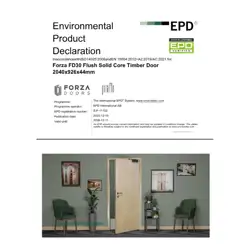
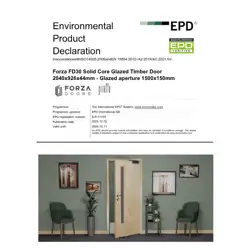
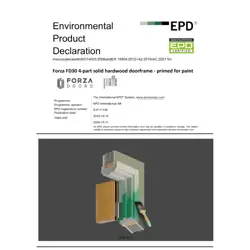
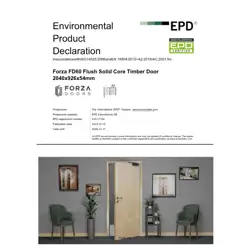
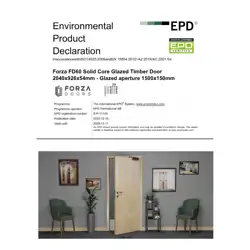
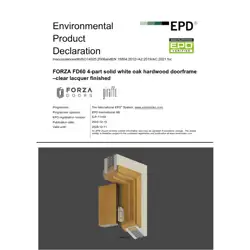
Forza Doors has been an early adopter of EPDs within the timber fire door sector and provides sustainability documentation alongside its wider commitment to transparency, and responsible manufacturing. Further information can be found on the Forza Doors Sustainability page.
This approach supports architects, specifiers and project teams seeking products that are not only beautifully safe but also supported by clear, independently verified environmental information.
Transparency Is Becoming a Competitive Advantage
As commercial fit-out projects continue to place greater emphasis on sustainability, transparency and embodied carbon, Environmental Product Declarations are becoming increasingly important during tender evaluations and specification reviews.
They provide a consistent, independently verified method of assessing environmental information and support more informed procurement decisions.
However, successful product selection still depends on balancing sustainability objectives with practical project requirements such as compliance, certification, performance, programme and delivery reliability.
For architects, Quantity Surveyors and procurement teams, EPDs are no longer simply a sustainability consideration. They are becoming an increasingly valuable part of demonstrating transparency, supporting project objectives and strengthening commercial fit-out tender submissions.
For more information about certified timber fire doors and sustainability documentation, visit the Forza Doors Fire Doors section, explore the Knowledge Library, review recent Commercial Case Studies, or contact the Forza team to discuss your next project.